
Entries and walkways
- Front entries and steps
- Sidewalks along the building
- Ramps and landings
One-time or scheduled
The walk from the curb to your door is the first thing a visitor, tenant, or customer judges. We pressure wash sidewalks, entries, loading areas, and dumpster pads to take off winter salt, sand, and ground-in grime. Book it once or put it on a schedule.
617-294-9815 (text-friendly) · Free walkthrough and estimate
The short answer
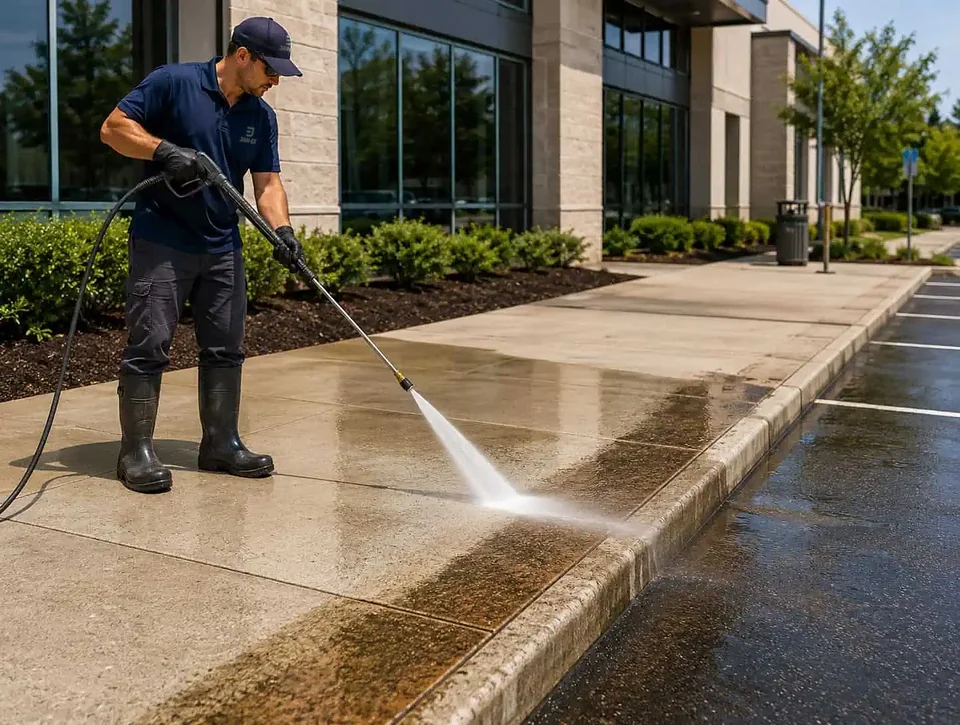
The ground outside your door takes a New England winter and shows it by spring: salt film, sand, gum, and stains that sweeping does not move. At Jan-Ex, we pressure wash Massachusetts offices, schools, and managed properties as if our own name were on the door, and we plan the work so there is always a dry, safe way into the building.
We wash sidewalks, entries, plazas, parking areas, loading areas, dumpster pads, and lower building walls. The work is done by uniformed, background-checked crews, and Jan-Ex is insured and bonded. Book a single visit or set a schedule. The walkthrough and estimate are free.
What's included
The outdoor surfaces people walk on, drive on, and see first: sidewalks, entries, plazas, parking areas, loading areas, dumpster pads, and lower building walls. Each is washed, rinsed, and left safe to use, and the proposal lists every area before we start.
Stains and graffiti. Gum, oil spots, food stains, and graffiti get extra attention. Oil that has soaked into concrete for years often lightens but may not come out completely, and we tell you that before we start.
Why it matters
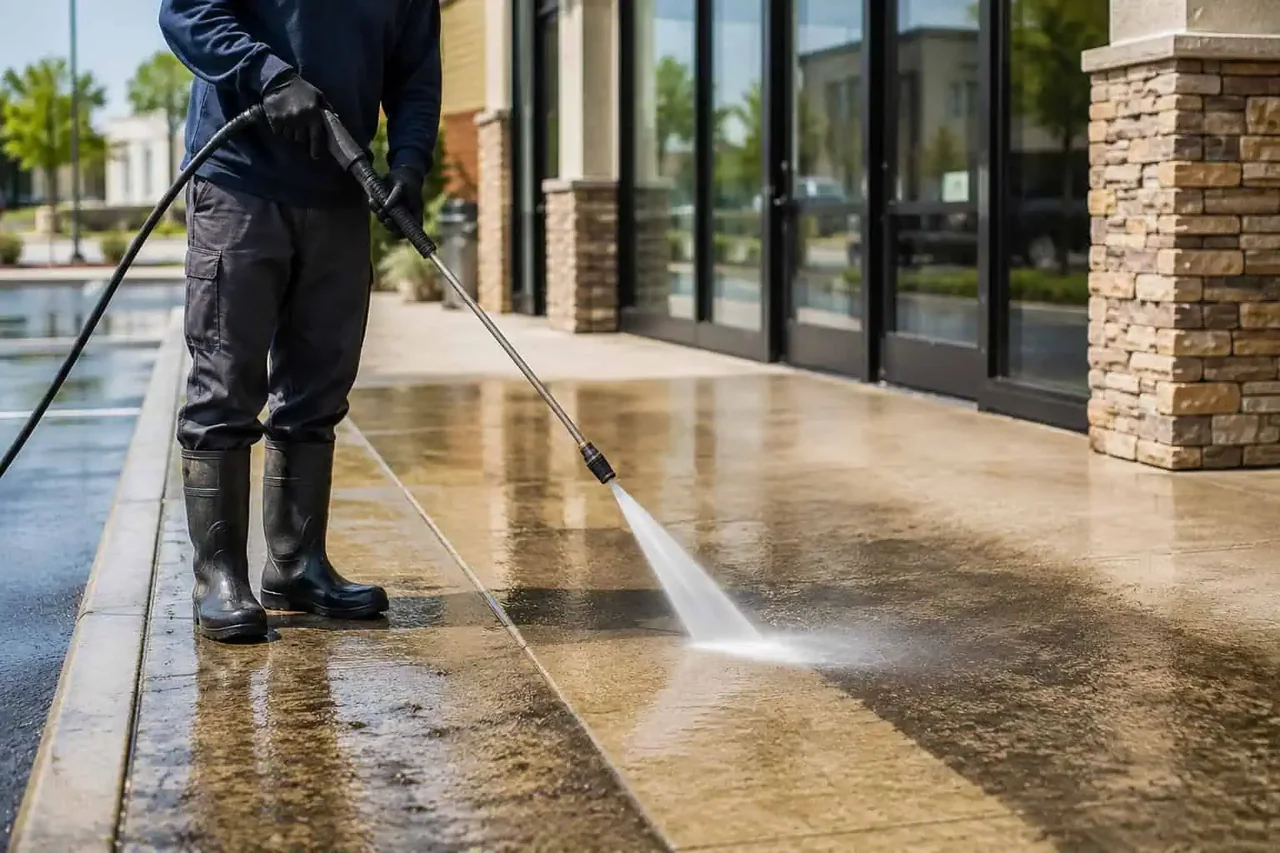
Because the ground outside is the first thing people see and the first thing they walk on. Washing takes off the salt, sand, and grime that sweeping leaves, before it is tracked inside.
Sidewalks and entries are what a visitor, tenant, or customer sees before they reach the door.
Salt and sand left on the walk get tracked onto your floors and carpet. Washing them off outside protects what is inside.
Algae, moss, and built-up grime make concrete slick when it is wet. Washing takes them off.
How it works
Four steps: we plan the time with you, clear and mark the area, wash and rinse, and reopen each area when it is safe to walk on.
Early morning, a weekend, or another time when foot and vehicle traffic is low. We agree on the plan with you ahead of time.
Loose sand and litter are swept up first, so they are not washed into the storm drain. Wet areas are coned off and marked with safety signs.
Pressure, nozzle, and water temperature are matched to the surface and the soil. Entrances are done one at a time, so there is always a dry way in.
The cones and signs come up once each area is safe to walk on.
How often
Once a year, in spring, suits most Massachusetts properties. Busy entries, loading areas, and dumpster pads need it more often, and we can set any schedule from a single visit to monthly.
| Area | Typical schedule | Why |
|---|---|---|
| Sidewalks and entries | Once a year, in spring | A winter of salt and sand leaves a film that sweeping does not remove. |
| Busy storefront or main entry | Two to four times a year | Gum, spills, and foot traffic build up faster. |
| Plazas and patios | Once or twice a year | Food and drink spills, and algae on shaded pavers. |
| Parking lots and garages | Once a year, in spring | Road salt and sand come in on cars all winter, along with oil drips. |
| Loading areas | Once or twice a year | Oil drips, tire marks, and pallet debris. |
| Dumpster pads | Quarterly | Spills and odor. Monthly where there is food waste. |
| Building walls | Every year or two | Dirt, algae on the shaded side, and splash marks along the base. |
When to book it in Massachusetts. After the last snow, once the salt and sand are done for the season. We do not pressure wash in freezing weather.
Pricing
By the project, not from a flat rate card. Four things set the price, and we confirm them at a free walkthrough, in person or virtual.
The same service, scoped for the building.
Jan-Ex is headquartered in Watertown and serves these areas.
If your town isn't listed, ask. Our crews cover most of the state.
Pressure Washing questions
Yes. One visit is fine, and you do not need a janitorial program with us.
Spring, after the last snow, once the salt and sand are done for the season. A second wash in fall suits busy entries, plazas, and loading areas.
No. Water freezes on the surface and creates a hazard. The season runs from spring through fall.
Both, when the soil calls for it. Cold water takes off salt, sand, and general grime. Grease, oil, and gum come up better with hot water and a detergent.
Not when the pressure and nozzle are matched to the surface. Older concrete, pavers, and painted surfaces get lower pressure.
Gum comes off. Fresh oil spots usually do. Oil that has soaked into concrete for years often lightens but may not come out completely, and we tell you what to expect at the walkthrough.
Yes, from brick, block, and concrete. Fresh paint comes off more completely than paint that has cured, and old paint on porous brick can leave a faint shadow. We tell you what to expect before we start.
Yes. We connect to an outdoor spigot on the property, so we ask about it when you request a quote.
Massachusetts towns do not allow wash water carrying debris to be sent into storm drains. We sweep up loose sand and litter before washing, and we plan where the water goes at the walkthrough.
Yes. Entrances are washed one at a time, and wet areas are coned off and marked with safety signs, so there is always a dry way in. The work is usually done early or after hours.
Yes. Jan-Ex is insured and bonded, and the work is done by uniformed, background-checked crews.
No. It is periodic exterior work, priced separately. If you have a janitorial program with us, it goes in the same proposal.
Request a pressure washing quote
A few questions about the property, so the first call is about your concrete and not about the basics. It takes about two minutes, and only your town, name, and phone are required.
Prefer to call or text? 617-294-9815
Bidding out several buildings? Invite us to bid