
Doors & entries
- Door handles and push plates
- Entry glass at hand height
- Reception counters and sign-in pens
One-time or scheduled
When someone has been sick, or a space gets heavy use, cleaning alone may not be enough. We disinfect the surfaces people touch most, by hand or with an electrostatic sprayer, and we do it the way the product label says. Book it once or add it to your regular cleaning.
617-294-9815 (text-friendly) · Free walkthrough and estimate
The short answer
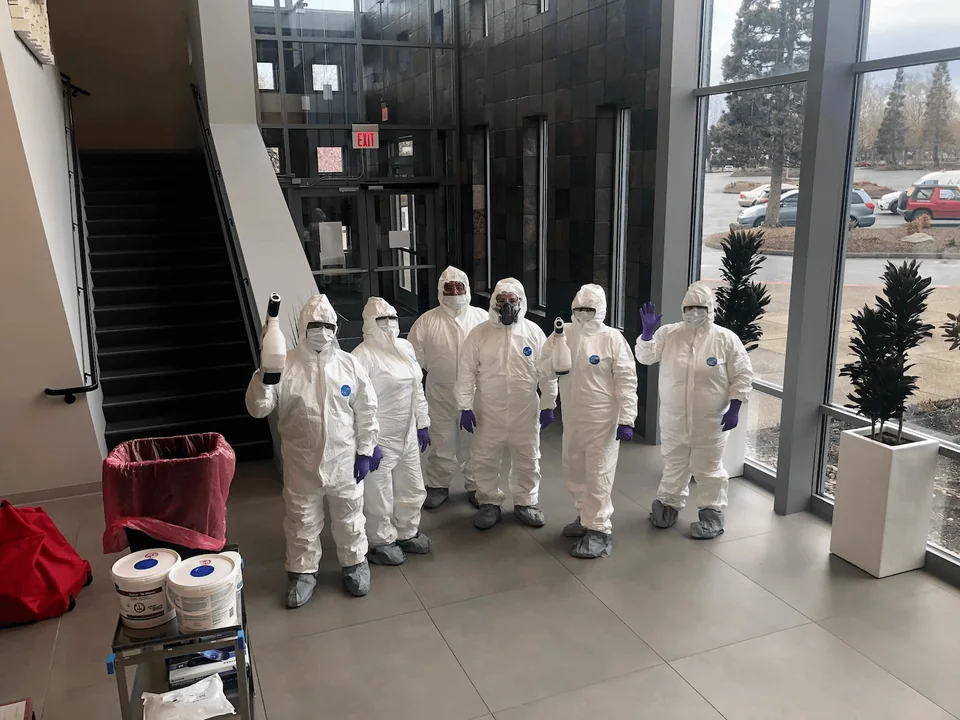
Disinfecting is a careful job: the surface has to be clean, the product has to be right, and it has to stay wet long enough to work. At Jan-Ex, we disinfect Massachusetts offices, schools, and medical offices as if our own name were on the door, using an EPA-registered disinfectant the way its label directs.
Book a single treatment or add scheduled rounds to your cleaning. We work by hand or with an electrostatic sprayer, after hours, and you do not need a janitorial program with us.
What's treated
The surfaces many different hands touch in a day. We walk your building with you and list them, so the round covers your surfaces and not a generic checklist.
We wipe electronics by hand. Screens, keyboards, and phones are never sprayed.
When you need it
Not every night. The CDC says regular cleaning is enough in most situations, and we will tell you when that is true for your building. These are the times we recommend adding it.
If regular cleaning is all your building needs, we will tell you.
The CDC recommends disinfecting the areas a sick person used. We treat those rooms and the shared surfaces on the way to them.
Lobbies, restrooms, breakrooms, and conference rooms, where many hands touch the same surfaces in a day.
Medical offices, childcare centers, and some employers set their own schedule. We follow yours.
Clean vs. disinfect
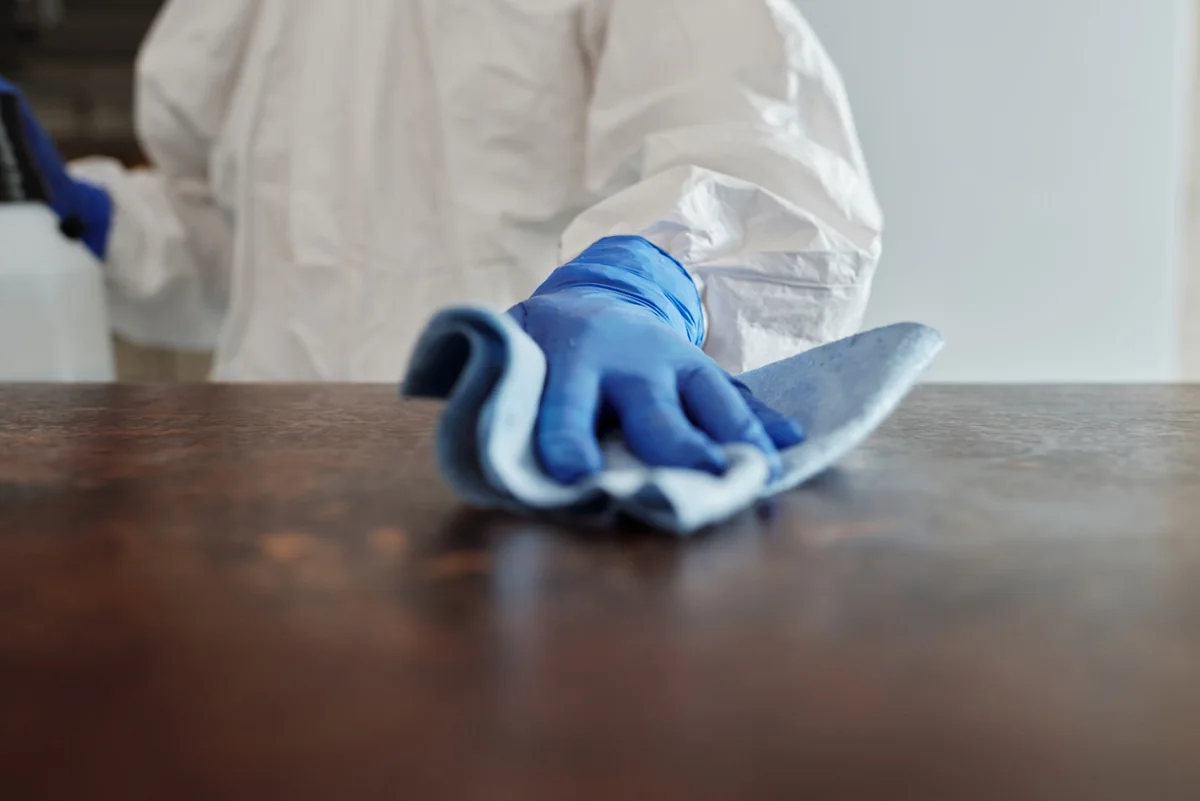
They are three steps, and each does more than the one before. Disinfecting only works on a surface that has been cleaned first.
| Step | What it does | When we use it |
|---|---|---|
| Cleaning | Removes dirt and most germs from a surface with soap or detergent. | Every janitorial visit. |
| Sanitizing | Reduces the germs that remain after cleaning. | Food-contact surfaces and childcare settings. |
| Disinfecting | Kills harmful germs that remain after cleaning, with an EPA-registered product left wet for its contact time. | After an illness, in heavily used shared areas, or when a policy calls for it. |
Source. CDC, When and How to Clean and Disinfect a Facility. Reviewed November 2026.
How we do it
In four steps, after hours, while the space is empty.
We list the high-touch surfaces with you, in person or on a virtual walkthrough.
Dirt blocks disinfectant, so every surface is cleaned before it is treated.
We apply an EPA-registered disinfectant and keep each surface wet for the contact time on its label.
The space is ready once the product has dried and the label's re-entry directions are met.
We use the product your policy requires. If your facility has a required or restricted list, tell us and we work from it.
Electrostatic spraying
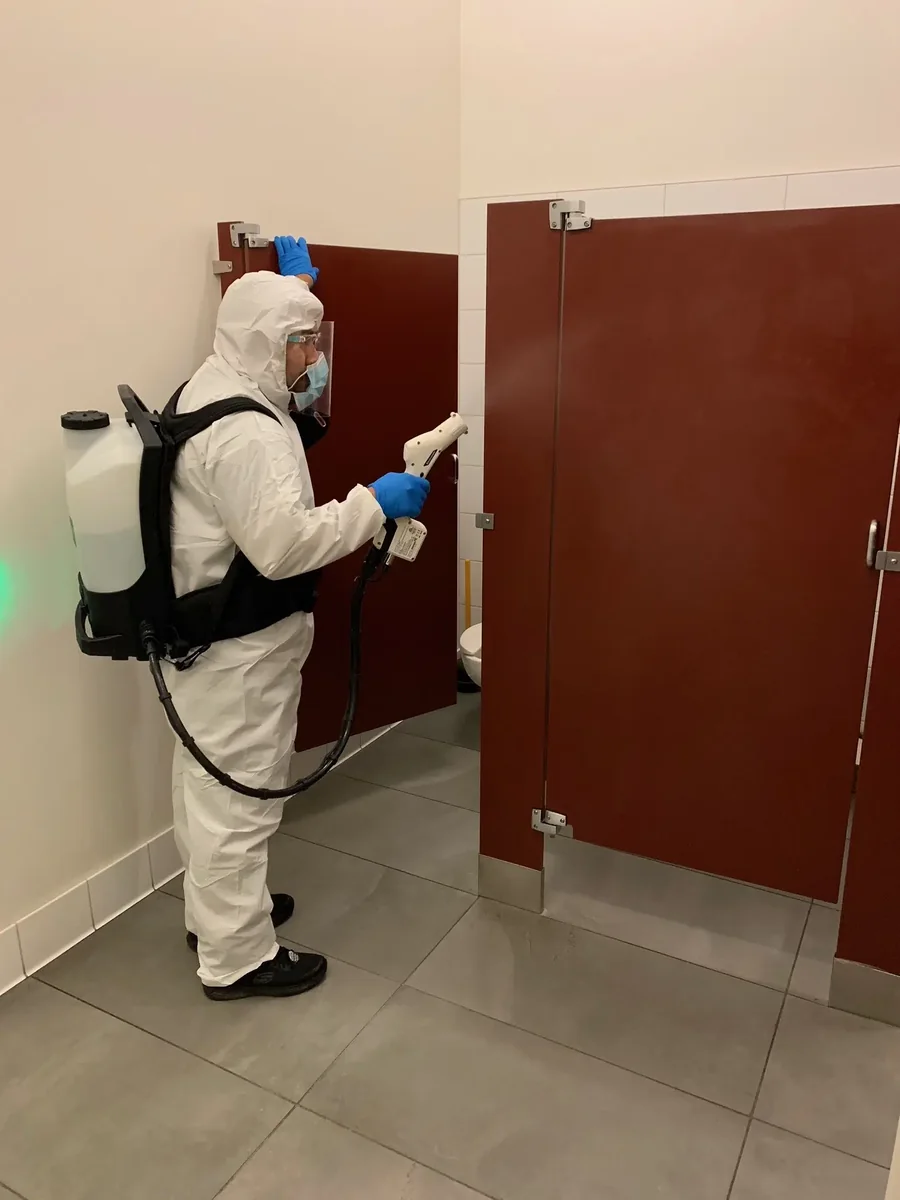
The sprayer gives each droplet an electrical charge, so the disinfectant is drawn to a surface and wraps around it. It is a way of applying disinfectant, not a stronger disinfectant.
Charged droplets reach the sides and undersides a cloth can miss.
Large open areas and rooms full of chairs, desks, lockers, or railings that take a long time to wipe by hand.
A small suite, a short list of touchpoints, and anything electronic.
We spray only disinfectants whose EPA-registered labels include directions for electrostatic use. The CDC advises against spraying any other way.
How often
As often as the situation calls for, which for most offices is not every night. You can book it three ways.
After an illness in the workplace, before a space reopens, or ahead of an event.
Weekly, monthly, or through cold and flu season, on top of your regular cleaning.
Written into your scope, so the round happens on set nights with the same crew.
Pricing
It is priced by the job. Four things set the price, and we confirm them at a free walkthrough, in person or virtual, or from a floor plan for a single treatment.
The same service, scoped for the building.
Jan-Ex is headquartered in Watertown and serves these areas.
If your town isn't listed, ask. Our crews cover most of the state.
Disinfection questions
It treats the surface at the time of the visit. It does not leave a lasting shield, and a surface can be re-contaminated the next time someone touches it. That is why busy buildings schedule rounds.
A kill rate belongs to a product and the germs listed on its label, at its full contact time. We do not promise a number for a building. We promise the product is used the way its label says.
Touchpoint wiping is. Door handles, light switches, and shared equipment are wiped at every janitorial visit. A full disinfection round, with the label contact time on every high-touch surface, is a separate service.
Yes. One visit is fine, and you do not need a janitorial program with us.
Yes. We treat spaces when they are empty, usually after hours. A room is ready again once the product has dried and the label's re-entry directions are met.
We do not spray them. Screens, keyboards, and other electronics are wiped by hand with a product suited to them.
EPA-registered disinfectants, used as their labels direct. If your facility has a required or restricted product list, tell us and we work from it.
No. Deep cleaning removes built-up dust and grime. Disinfection kills germs on surfaces that are already clean. They are often booked together.
Yes. We disinfect only where it is needed, and we can choose the product from your approved list.
Yes. Jan-Ex is insured and bonded, and the work is done by uniformed, background-checked crews.
Request a disinfection quote
A few questions about your space and what happened, so the first call is about your timing and not about the basics. It takes about two minutes, and only your town, name, and phone are required.
Prefer to call or text? 617-294-9815
Bidding out several buildings? Invite us to bid